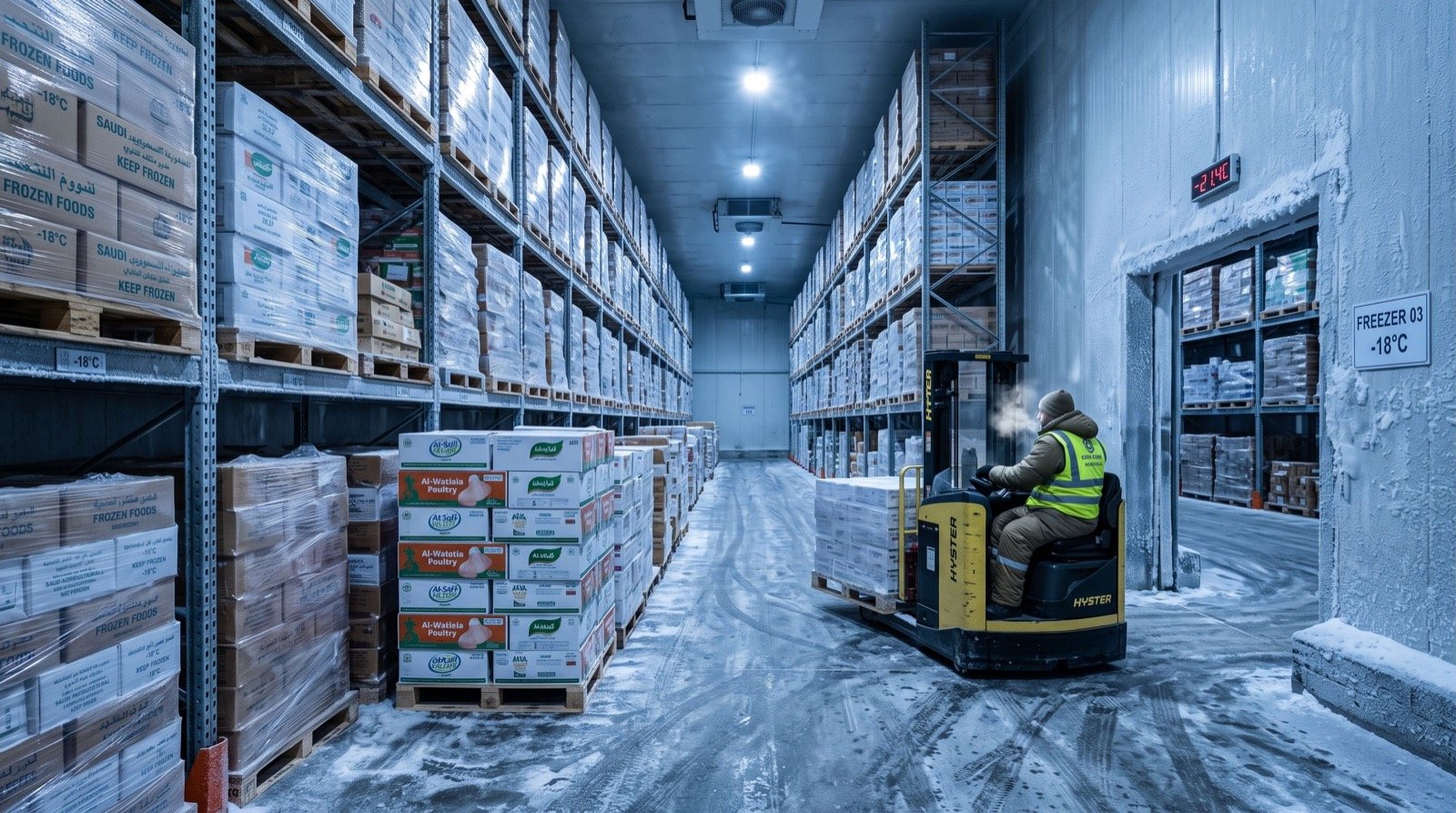
Chilled Storage in Riyadh: A 2026 Guide for Food Businesses
Chilled storage in Riyadh has become a make-or-break factor for restaurants, catering firms, pharmacies, and distributors across the capital. As Riyadh’s food and retail sector keeps expanding in 2026, the margin between a profitable week and a spoiled inventory loss often comes down to one thing: whether your cold chain actually holds its temperature from the warehouse door to the shelf.
Saudi Arabia’s climate makes this harder than it looks on paper. Ambient temperatures in Riyadh regularly exceed 40°C for months at a time, and every degree of thermal load outside a chilled unit is a degree your refrigeration system has to fight. Businesses that treat cold storage as an afterthought end up paying for it twice — once in energy bills, and again in discarded stock.
Why Chilled Storage in Riyadh Is a Different Challenge Than Elsewhere
Unlike coastal cities with milder swings, Riyadh’s dry desert heat creates extreme diurnal temperature shifts. A delivery truck sitting at a loading dock for even 20 minutes in July can push product temperature up several degrees before it reaches the chiller. That is why facility placement, dock insulation, and rapid-transfer protocols matter as much as the refrigeration unit itself.
Food safety regulators worldwide agree on the core principle: perishable goods must stay out of the “danger zone” between roughly 4°C and 60°C for as little time as possible. The U.S. Food and Drug Administration’s safe food handling guidance lays out exactly why consistent chilled temperatures prevent bacterial growth, and the same physics apply whether you’re in Chicago or Chicago-hot Riyadh.
What Counts as Properly Chilled Storage?
Properly chilled storage keeps product consistently between 0°C and 5°C, with continuous monitoring rather than spot checks. A facility that dips above 8°C for even a few hours during a power fluctuation can compromise an entire batch of dairy, meat, or pharmaceutical stock — even if the readout looks fine again an hour later.
Choosing a Storage Partner That Understands Local Conditions
Not every warehouse operator in the region runs a true cold chain. Some simply have a refrigerated room; few have the backup power, humidity control, and rapid-access loading systems needed to keep temperature-sensitive goods stable through a Riyadh summer. When you’re evaluating Chilled Storage in Riyadh, ask providers directly about generator failover time, dock seal quality, and how frequently they calibrate their sensors.
Many Riyadh-based businesses also run mixed inventories — some product needs refrigeration, while packaged or shelf-stable goods do not. In those cases, it often makes financial sense to pair a chilled unit with a non-refrigerated facility elsewhere in the kingdom, such as Dry Storage In Dammam, to avoid paying premium cold-storage rates for goods that don’t need them.
How Much Does Chilled Storage Typically Cost in 2026?
Pricing varies by volume, contract length, and temperature band required, but most Riyadh operators price chilled space at a premium of 30–60% over equivalent dry storage, reflecting the energy and equipment overhead. Long-term contracts and palletized (versus loose-case) storage usually bring unit costs down significantly.
A Quick Comparison: Storage Types and When to Use Them
| Storage Type | Typical Range | Best For |
|---|---|---|
| Chilled Storage | 0°C to 5°C | Dairy, produce, fresh meat, pharma |
| Frozen Storage | -18°C or below | Frozen foods, long-shelf-life meat/seafood |
| Ambient Storage | Room temperature, humidity-controlled | Beverages, canned goods, cosmetics |
| Dry Storage | Room temperature, low humidity | Grains, packaging, dry goods, documents |
Practical Steps Before You Sign a Storage Contract
Before committing to any facility, walk through this checklist. It’s based on patterns we’ve seen repeatedly cause disputes between tenants and storage operators in the Riyadh market.
- Confirm backup generator capacity and documented failover time, not just “we have a generator.”
- Ask for temperature-log sample reports from the last 90 days, not a sales brochure.
- Check loading dock design — exposed docks lose the cold-chain battle before product even reaches the room.
- Clarify who is liable if a mechanical failure spoils your stock, and get it in writing.
- Verify the facility’s proximity to your distribution routes; chilled goods degrade faster the longer the “last mile” takes.
One original insight worth noting from 2026 operations: the biggest preventable loss we see isn’t mechanical failure — it’s staff leaving chilled-room doors open during manual stock counts. A five-minute inventory check during peak afternoon heat can undo hours of stable refrigeration. Facilities that enforce strict door-open time limits consistently report fewer spoilage incidents than those relying on equipment alone.
Frequently Asked Questions
What temperature should chilled storage in Riyadh maintain?
Most chilled storage facilities target 0°C to 5°C for perishable food and pharmaceutical products, with continuous digital monitoring rather than manual spot checks, since Riyadh’s ambient heat makes drift more likely during power interruptions.
Is chilled storage more expensive than dry storage in Saudi Arabia?
Yes, typically 30–60% more per pallet or cubic meter, due to the energy cost of running refrigeration continuously through extreme summer heat and the added equipment maintenance that entails.
Can I store both chilled and non-chilled goods with the same provider?
Many providers now offer bundled contracts spanning chilled, frozen, and dry storage across multiple cities, which can simplify logistics and sometimes reduce overall per-unit pricing compared with using separate vendors.
How often should a storage facility’s refrigeration be inspected?
Industry best practice calls for daily automated temperature logging, weekly physical inspections of seals and compressors, and a full maintenance audit at least quarterly to catch wear before it causes a failure.
Working With Quality Service Providers
Ultimately, chilled storage is only as reliable as the operator running it. Businesses that take the time to vet generator backup, staff discipline, and logging transparency tend to avoid the costly surprises that come from treating storage as a commodity purchase. For companies researching vendors more broadly across categories, our breakdown of quality service providers covers the same diligence principles that apply when choosing any specialized vendor in the kingdom.
As 2026 continues to push more cold-chain demand into Riyadh’s growing food and healthcare sectors, the businesses that invest early in verified, well-monitored chilled storage will be the ones that avoid costly write-offs later. Treat your storage partner selection with the same rigor you’d apply to a supplier contract — because in practice, that’s exactly what it is.